
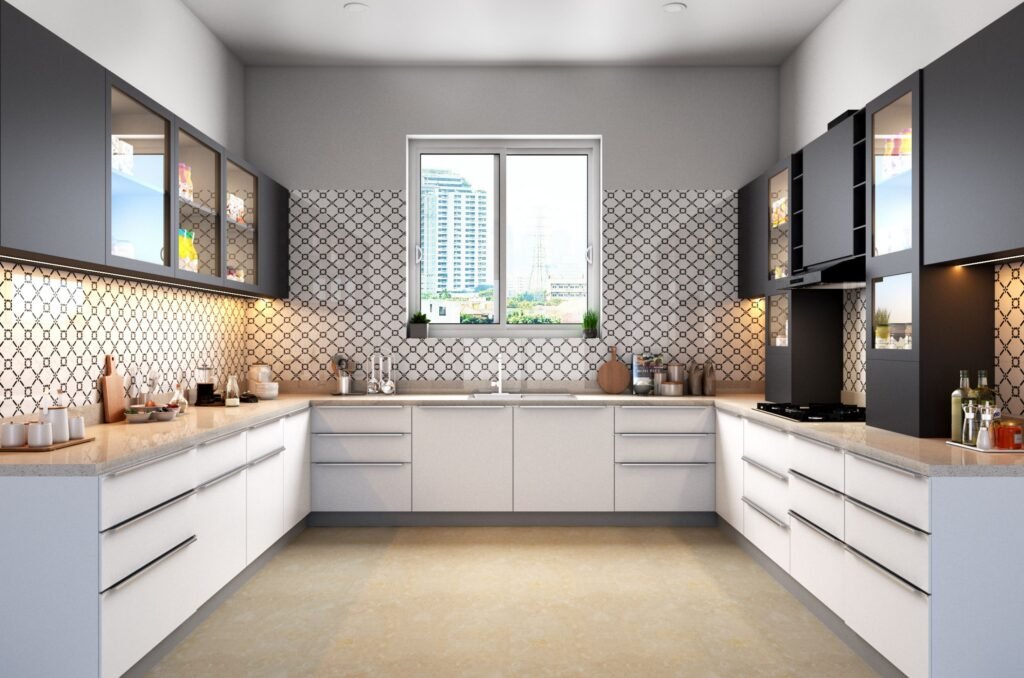
The kitchen is one of the most important spaces in any home. It needs to look good, but more importantly, it needs to work well every day. Storage, movement, appliance placement, cleaning and cooking habits all influence how comfortable a kitchen feels.
When planning a new kitchen, one of the first decisions homeowners face is whether to choose a modular kitchen or opt for a custom-designed kitchen.
Both approaches have their advantages. The right choice depends on your space, lifestyle, budget, design preferences and how much flexibility you need.
Let’s understand the difference and how to decide which option suits your home.
What Is a Modular Kitchen?
A modular kitchen is made up of pre-designed cabinet modules that are manufactured separately and assembled at the site.
These modules can include base cabinets, wall cabinets, tall units, drawers, corner storage and other components. They are planned according to the kitchen layout and available space.
One of the main advantages of a modular kitchen is the organised manufacturing process. Since many components are prepared before installation, the process can be relatively streamlined.
Modular kitchens also offer a wide range of finishes, colours, hardware and internal storage options, making it possible to create a kitchen that feels personalised while working within a structured system.
What Is a Custom Kitchen?
A custom kitchen is designed and built specifically around the requirements of a particular home.
Instead of selecting primarily from standard cabinet modules, the design can be adapted more extensively to the dimensions of the room, unusual corners, architectural features, storage requirements and the homeowner’s preferences.
Customisation can be especially useful when a kitchen has an unusual layout, limited space, structural constraints or specific storage requirements that do not fit standard dimensions easily.
A custom kitchen can also provide greater freedom when it comes to materials, finishes, furniture details and design elements.
Modular Kitchen vs. Custom Kitchen: The Main Differences
The biggest difference is flexibility.
A modular kitchen generally works with a structured range of cabinet sizes and components, while a custom kitchen can be adapted more closely to the individual space.
However, that does not automatically mean one is better than the other.
Here are the main factors worth considering.
1. Space and Layout
Your kitchen layout should be one of the first things you evaluate.
Modular kitchens work particularly well in apartments and homes with straightforward layouts. Standard modules can be combined to create practical arrangements for different kitchen sizes.
Custom kitchens can be more useful when the room has unusual corners, awkward walls, columns, varying ceiling heights or other architectural constraints.
If every inch of space matters, a custom approach may give you more flexibility in using difficult areas.
2. Storage Requirements
Think about what you actually need to store before choosing your kitchen design.
A modular kitchen can provide plenty of storage through drawers, cabinets, tall units, corner solutions and overhead storage. Many modern modular systems also offer internal organisers designed for specific kitchen items.
A custom kitchen gives you the opportunity to plan storage around your specific habits.
For example, if you use certain appliances every day, you may want them positioned at a particular height or location. If you have a large collection of cookware, specialised storage can be incorporated into the design.
The best kitchen is not necessarily the one with the most cabinets. It is the one where everything you regularly use has a sensible place.
3. Design Flexibility
Modular kitchens provide a broad selection of finishes, colours, handles, countertops and cabinet styles.
This makes it possible to create anything from a clean contemporary kitchen to a warmer, more traditional-looking space.
Custom kitchens can offer even greater flexibility because dimensions, furniture details and design elements can be created around your specific requirements.
If you already have a very particular design in mind, customisation may be worth considering.
4. Budget
Budget is another important consideration.
The overall cost of a kitchen depends on much more than whether it is modular or custom. Materials, hardware, countertops, appliances, finishes, storage accessories, installation and the complexity of the design can all influence the final cost.
A modular kitchen can offer more predictable options because many components are based on established systems.
A custom kitchen may require more specialised manufacturing and installation, particularly when the design includes unusual dimensions or detailed craftsmanship.
Instead of comparing only the initial price, consider the complete cost of the kitchen and what is included in the execution.
5. Installation and Execution
With a modular kitchen, many components are manufactured beforehand and brought to the site for assembly.
This can make installation more organised, particularly when measurements and planning have been handled correctly.
Custom kitchens may involve more on-site work depending on the design and materials involved.
The quality of execution matters in both cases. Accurate measurements, proper installation, good hardware and careful finishing can make a significant difference to the final result.
6. Materials and Finishes
Both modular and custom kitchens can be designed using a variety of materials and finishes.
Depending on the project, options may include different board materials, laminates, acrylic finishes, veneers, glass, stone or other surface treatments.
The right choice depends on factors such as moisture exposure, maintenance, durability, appearance and budget.
Rather than choosing a material simply because it looks attractive in a sample, consider how it will perform in your actual kitchen.
7. Maintenance and Future Changes
A kitchen is used every day, so maintenance should be considered during the design stage.
Modular systems can make it easier to replace or modify certain components because they are based on defined modules.
Custom kitchens can also be repaired or modified, but the process may depend more on the original construction, materials and availability of matching components.
Think about how you expect to use the kitchen over the next several years rather than designing only for the present.
Which Kitchen Is Better for an Apartment?
For many apartment homeowners, a modular kitchen can be a practical choice because it combines organised planning, a wide variety of finishes and efficient storage options.
Apartments often have clearly defined kitchen areas, making it easier to work with modular layouts.
However, if the apartment has an unusual layout or you need highly specific storage solutions, a custom approach may be more suitable.
The important question is not simply whether your home is an apartment. It is whether the kitchen design can make the available space work efficiently for your lifestyle.
Which Kitchen Is Better for a Larger Home?
Larger homes can accommodate either approach.
A modular kitchen can provide a clean, structured design with extensive storage and modern functionality.
A custom kitchen may be preferable if you want the kitchen to include distinctive furniture elements, specialised storage, unusual dimensions or a design that closely connects with the architecture of the home.
In larger kitchens, you can also combine approaches. For example, standard modular cabinetry can provide the main storage while a custom island, breakfast counter or furniture element adds a more personalised character.
How to Choose the Right Option for Your Home
Before making a decision, consider these questions:
How do you use your kitchen?
Think about how often you cook, how many people use the kitchen and which appliances or utensils you use most frequently.
How much storage do you need?
Make a list of your cookware, appliances, groceries and everyday items before planning the cabinets.
Does your space have unusual dimensions?
Columns, corners, windows, beams and structural elements may influence whether standard modules are sufficient.
What is your overall budget?
Set a realistic budget that includes cabinets, hardware, countertops, appliances, lighting, installation and other finishing requirements.
How important is customisation?
If you have very specific requirements, a custom approach may provide greater flexibility.
How long do you plan to use the kitchen?
If you are designing your long-term home, it is worth considering durability, maintenance and how your needs may change over time.
Can You Combine Modular and Custom Kitchen Design?
Yes.
In fact, combining the two approaches can often provide a practical balance.
For example, the main kitchen can use modular cabinetry for efficient storage and installation, while selected elements such as an island, open shelving, seating area or special storage unit can be customised.
This approach allows homeowners to benefit from the organisation of modular design while adding personal touches where they matter most.
Final Thoughts
There is no universal answer to the question of whether a modular kitchen or custom kitchen is better.
A modular kitchen can be a practical choice for homeowners who want organised planning, efficient storage and a wide range of design options.
A custom kitchen may be better for homeowners who need greater flexibility, have unusual spaces or want specific design and storage solutions.
The best choice is the one that fits your space, lifestyle, budget and long-term needs.
At SAAR Interiors, we work across kitchen planning, interior design, designer furniture, décor and turnkey execution. Our approach starts with understanding how you use your home and then planning the design around those requirements.
Whether you choose a modular system, a custom solution or a combination of both, thoughtful planning can turn your kitchen into a space that is comfortable, efficient and enjoyable to use every day.
Frequently Asked Questions
Is a modular kitchen better than a custom kitchen?
Not necessarily. A modular kitchen offers structured planning and efficient installation, while a custom kitchen provides greater flexibility. The right choice depends on your space, requirements and budget.
Is a custom kitchen more expensive than a modular kitchen?
It can be, particularly when the design requires specialised materials, dimensions or craftsmanship. However, the total cost depends on materials, hardware, finishes, storage and execution rather than simply the type of kitchen.
Can a modular kitchen be customised?
Yes. Modular kitchens can be personalised through layouts, finishes, colours, hardware, storage accessories and combinations of different cabinet modules.
Which kitchen is better for a small apartment?
A well-planned modular kitchen can work very effectively in a small apartment because its components can be arranged to maximise available storage and floor space. A custom solution may be useful when the room has unusual dimensions.
How long does a kitchen design usually last?
The lifespan depends on the materials, hardware, installation quality, maintenance and everyday use. Choosing durable materials and good-quality hardware during the planning stage can help create a kitchen that remains functional for years.